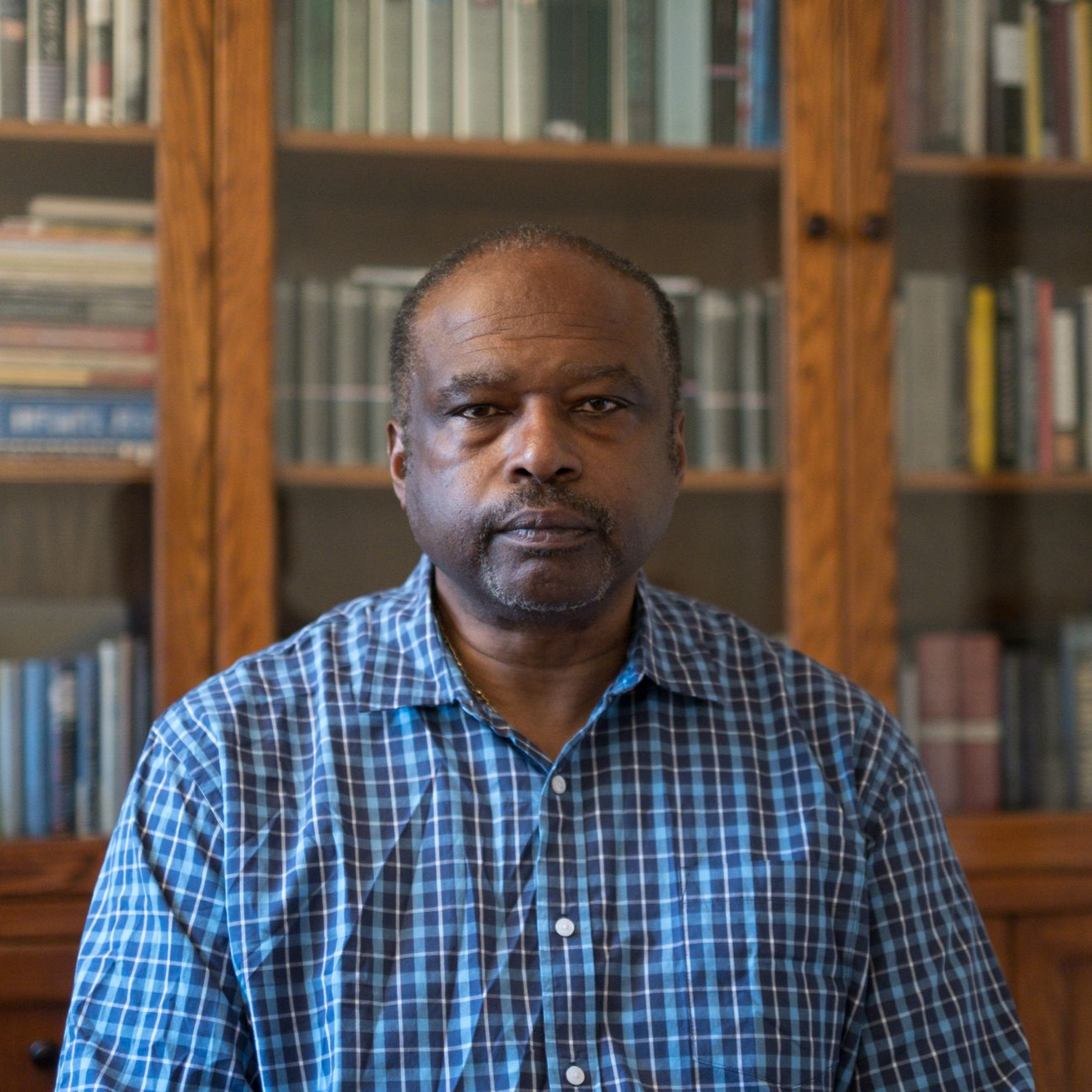
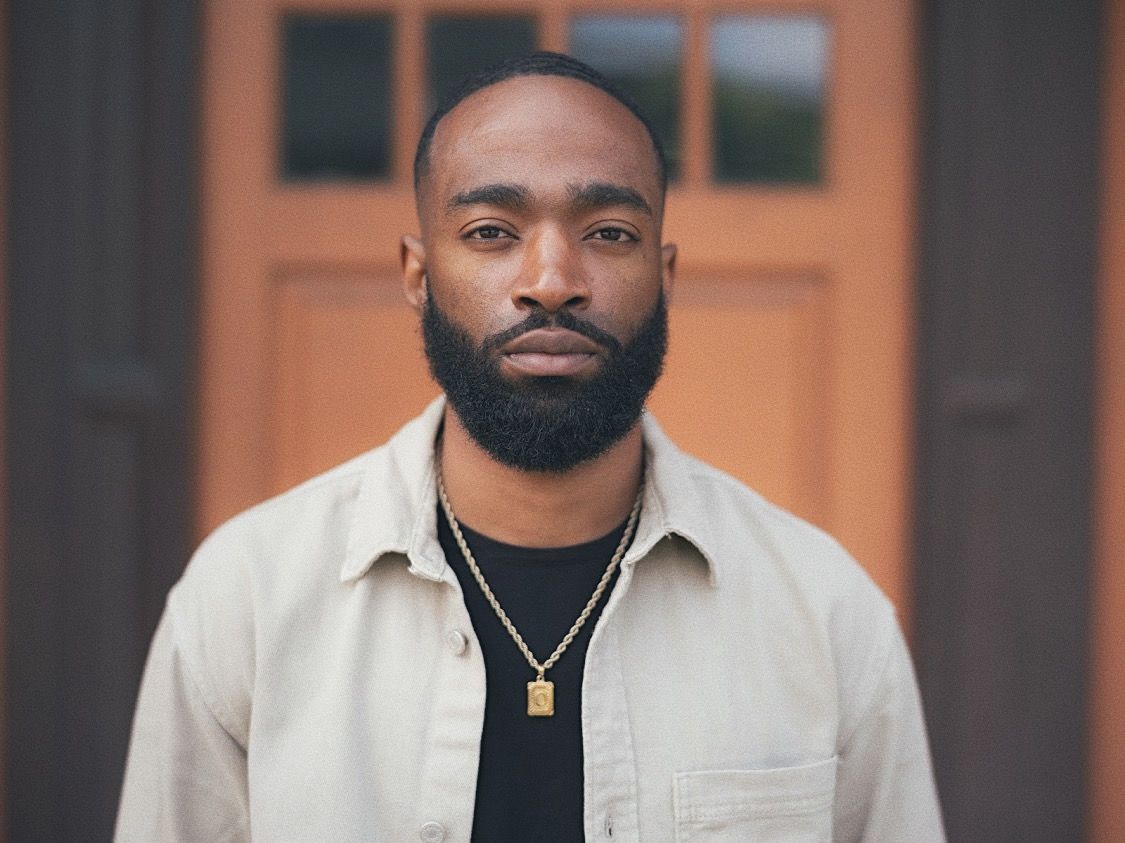
Contributor Spotlight: Daniel B. Summerhill
"Our politic is our truest element of craft."
Summerhill's review of Love is a Dangerous Word: Selected Poems by Essex Hemphill, edited by John Keene and Robert F. Reid-Pharr, appears in Issue 43.4.
Is there a quote that has guided you on your writing journey?
"Hope is invented daily." - James Baldwin
What does being a part of Callaloo mean to you as a writer?
It means being a part of a legacy of folks dedicated to witnessing and documenting the human condition. At present and at recent, at least in the West, the condition of Black folks and African American diasporic people is the human condition. So being a part of a platform whose mission serves that work feels good.
Can you share about how your creative journey or background led you to
Callaloo?
I applied for Callaloo's workshop in Oxford as a sophomore in college and then again as a junior to no avail. I also submitted work to the journal back then also without any success; however, the community of intelligence I discovered in Callaloo made it a place I returned to, contributor or not.
What themes or messages do you hope readers take away from your piece?
My piece is much larger than me. Much larger than any obsession I may try to grapple with in work of my own, but rather a review of the newly selected poems of the late Essex Hemphill assembled by John Keene and Robert F. Reid-Pharr. Since the magnitude of Hemphill's work and life cannot be summed up in my review. At the very least, I hope readers are able to understand that there are teeth in love. That there is a also a lineage of struggle, of poets who understand the potency of language and have used their enterprise in service of making clear their politics. Our politic is our truest element of craft.
How does this work connect to the larger body of your creative practice?
Though getting font and text down on paper is a mostly solitudinous effort, writing is conversational by nature and in my own work I am in constant conversation with the idea of self-confrontation, love, the complexity of human relationships, the same as Hemphill. So being able to sit with his work ahead of its release—to sit with the intentionality of John Keene and Robert F. Reid-Pharr's curation and framing of Hemphill legacy and Hemphill's work enlivened my own work in progress and likely work yet to come.
What inspired you to start writing in the first place?
I believe I am a writer because of a few folks: my oldest sister Tenesha Smith who is also a poet and who left behind an album of poems she had written while in high school for me when she moved away; my 9th grade English teacher who bought me The White Boy Shuffle by Paul Beatty and my first journal; my grandfather who was a carpenter and made magic with his hands, the same way poets do; and lastly, James Baldwin, who says:
"I suppose finally the most important thing was that I am a writer. That sounds grandiloquent, but the truth is that I don't think that, seriously speaking, anybody in his right mind would want to be a writer. But you do discover that you are a writer and then you haven't got any choice. You live that life or you won't live any…If you don't live the only life you have, you won't live some other life, you won't live any life at all. That's the only advice you can give anybody. And it's not advice, it's an observation."
Are there any upcoming projects or pieces you're working on that you'd like to share with our readers?
I have two forthcoming projects that will be out in the world at some point in the near future:
Praying for Rain is a work of docupoetics that I hope serves to forefront James Baldwin's grapplings, but also magnify the connections that we might make to today's social and political landscape. The title, “Praying for Rain” comes from Nikky Finney’s introduction to
Jimmy's Blues and Other Poems. Finney got the quote from listening to Baldwin’s 1961 interview with Studs Terkel who asks Jimmy: “Who are you now?” Baldwin responds, “Who indeed? I may be able to tell you who I am, but I am also discovering who I am not. I want to be an honest man. And I want to be a good writer. I don't know if one ever gets to be what one wants to be. You just have to play it by ear, and pray for rain.” One of two of the title poems in the collection appears in
Callaloo Issue 41.5. James Baldwin's prose (essays and novels) are chronicled a great deal, however he thought of himself as a poet first and wrote poems early on and then towards the end of his life. I wanted to be in conversation with that part of Baldwin, the part that is overshadowed but instrumental to his mind and his view of the world.
My other forthcoming project, Hand Shuffle: On Kobe, Four Black Moms and Good Music, was written as an epistle to my mother—my four Black moms—and Black maternal figures everywhere. Hand shuffle uses music, popular culture and the late Kobe Bryant to grapple with grief, love and a maternal-son coming-of-age. I write candidly about growing up between East and West Oakland in the 90’s and early 2000’s. Having never met my father, I chronicle my boyhood fantasy of NBA Hall-of-Famer Kobe Bryant being my long lost father. Using episodic threads of music history, literary geography and popular culture, I grapple with the absence, while recognizing the hands of each of my sisters, or how my four Black moms were the salve I had been searching for throughout my coming-of-age.
How do you hope to support and uplift other writers working in your genre?
In whatever way is most helpful to them. As a professor, I teach in a way that makes it apparent that everyone in the room is on a writing journey, and that some folks are further along than others and that's okay; we have a common goal, to make each other stronger writers. As a poet, I hope to uplift the idea of possibility and that our work as poets is first the work of being engaged and socially conscious human beings, and that the page comes second to that. I hope to help folks understand that if we lead with that mindset, the poems write themselves. I hope folks know they can depend on me in tangible ways. I hope poets know that I don't make a distinction between being a poet and a human being. Be it the classroom, workshop, discourse, hoop etc. I hope to better support the idea of being a good literary citizen.
DANIEL B. SUMMERHILL is a poet and essayist from Oakland, CA. He is the author of
Divine, Divine, Divine and
Mausoleum of Flowers. The inaugural Poet Laureate of Monterey County, Summerhill has earned fellowships from Baldwin for the Arts, Virginia Center for the Creative Arts, The Watering Hole and elsewhere. His work has been published widely, including venues such as The Academy of American Poets,
Obsidian,
Ploughshares,
Callaloo,
The Indiana Review,
The Rumpus,
The Wall Street Journal and elsewhere. Winner of the 2023 Indiana Review 1/2K Prize and the inaugural Rumpus Prize for Nonfiction, Daniel is a Professor of Poetry at Santa Clara University and believes in the liberation of oppressed peoples everywhere, especially through the dissolution of empire.
Social Media: @bennysummerhill /
Website:
www.danielsummerhill.com