
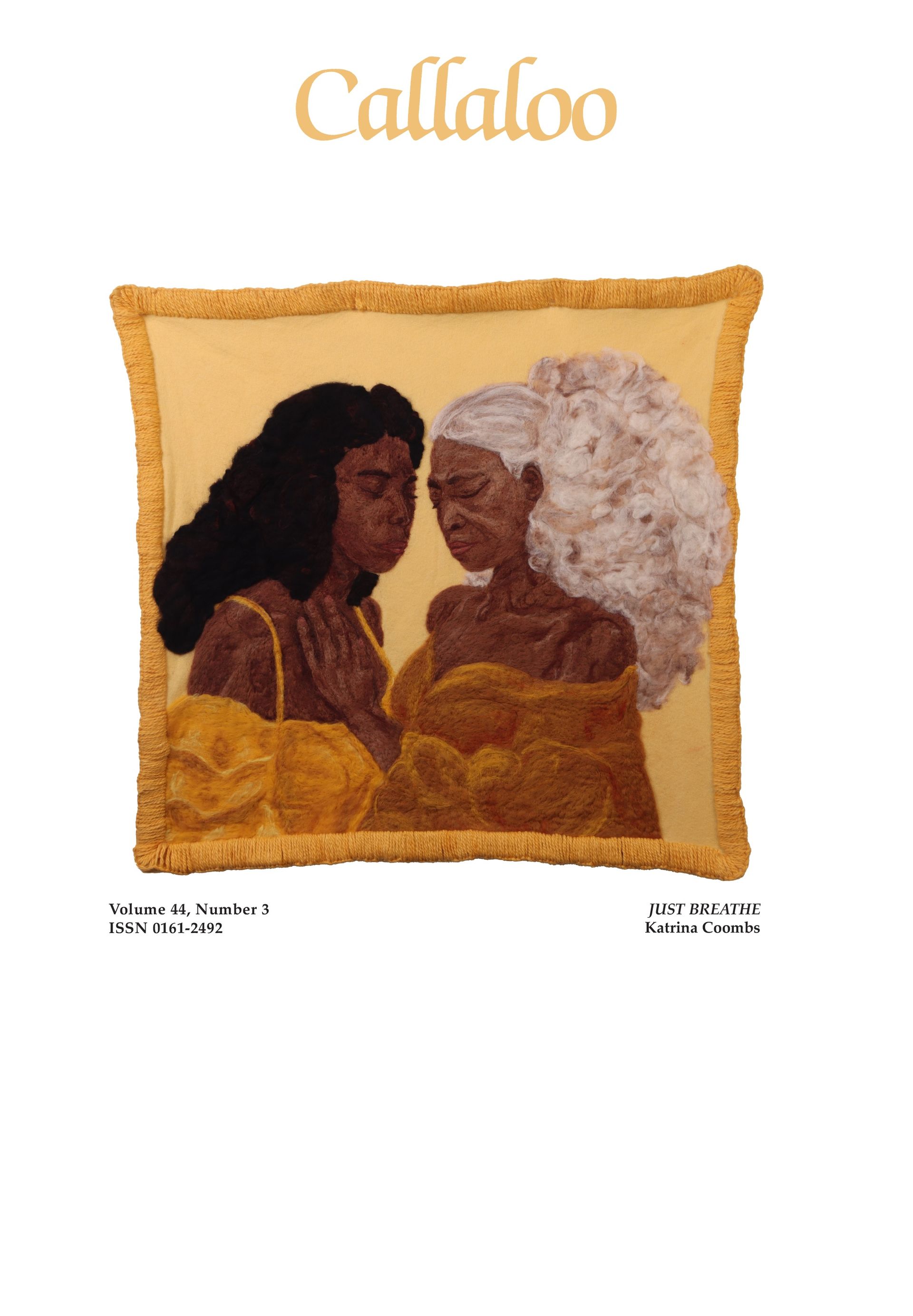
Summer 2026 - 44.3
Out Now
This summer marks the 250th anniversary of the United States of America. There’s no separating this country’s negative history from its positive contributions. Our economy, our social mores and norms, the very land on which we live all reflect this complexity.
Many of the pieces in this issue point to resilience, and how we manage to not give up in the face of tragedy. There is ample prose in Vol 44.3 that deals with the universal pain of losing a parent and the challenge of letting go and fashioning a life without their guidance, from Daniella Castillo Vasquez, and Douglas Hajanika. Then there is the loss of places and spaces, as seen through the eyes of Jonathan Ezra Goldman, Christine Kendall, and Guy Melvin.
Beyond these stories, we’re continuing a type of pairing that we’ve been experimenting with, where we look at an author through more than one lens. In this issue, Leigh Raiford is in conversation with Kimberly Juanita Brown about her new book, When Home is a Photograph, along with a review of the work by Delphine Sims. Similarly, we feature a short story from Chad Anderson’s new collection, accompanied by Luke Hankins’ review of the book. There is a compelling interview with Nicholas Boggs on his new book Baldwin: a Love Story. We’re especially excited to present guest editor Isis Semaj-Hall’s special section “Deep Listening: Leaning into Silence in Jamaica.”
We hope that these stories of our power and fear, our rage and confusion, our beauty and success will fortify you for the next leg of whatever journey you are on. We’re so pleased to have you reading with us.
–Kyla Kupferstein Torres
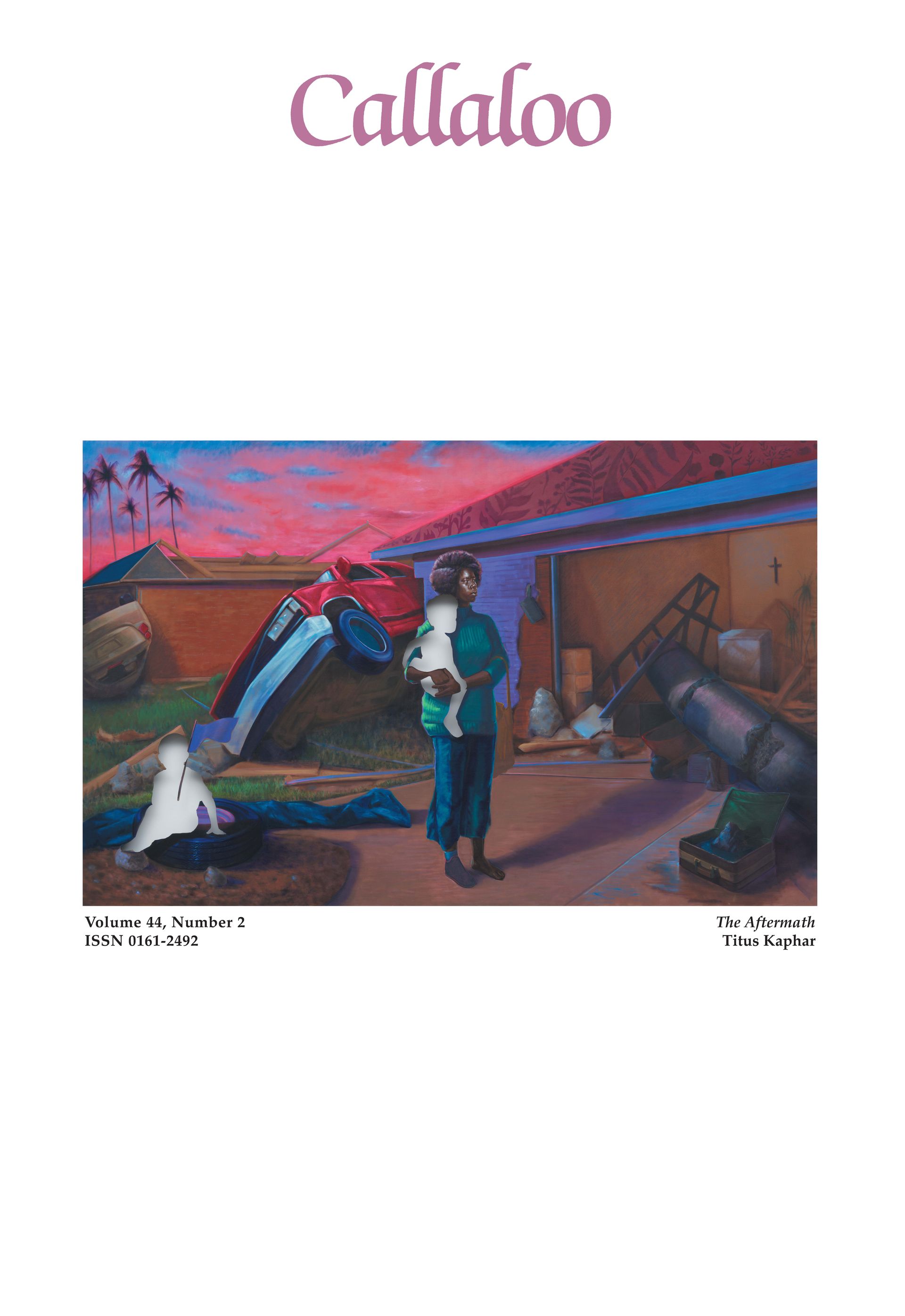
Spring 2026 - 44.2
Reading poetry each morning has become a ritual that reminds me that life requires us to make meaning, that language is there, in part, to refine our ideas, and allows those ideas to move us to action to make this life better for our beloveds and our fellows. In so many ways, this is what Callaloo exists to do: provide a space for Black people to collect our words and ideas such that they are shared, and can provoke others to do or make or conjure.
This issue is filled with poetry that does just that, and features interviews with two celebrated poets,
Camille Dungy and
Aracelis Girmay. As always, we have plenty of work to satisfy those who prefer prose, like
Emmy Parker’s invitation to listen for what she calls Black Sonic Intelligence in the music of Stevie Wonder and Maceo Parker, and
Adams Adeosun’s dreamlike chronicle of a retired father’s adjustment to life without work in Lagos.
We and our contributing writers offer this new issue of Callaloo in hopes that it will do for you what the poets on my bedside table did for me: whisper from your nightstand or coffee table, slow down, child. Take a minute. Take a breath. We’re so grateful you’re here reading with us.
–Kyla Kupferstein Torres
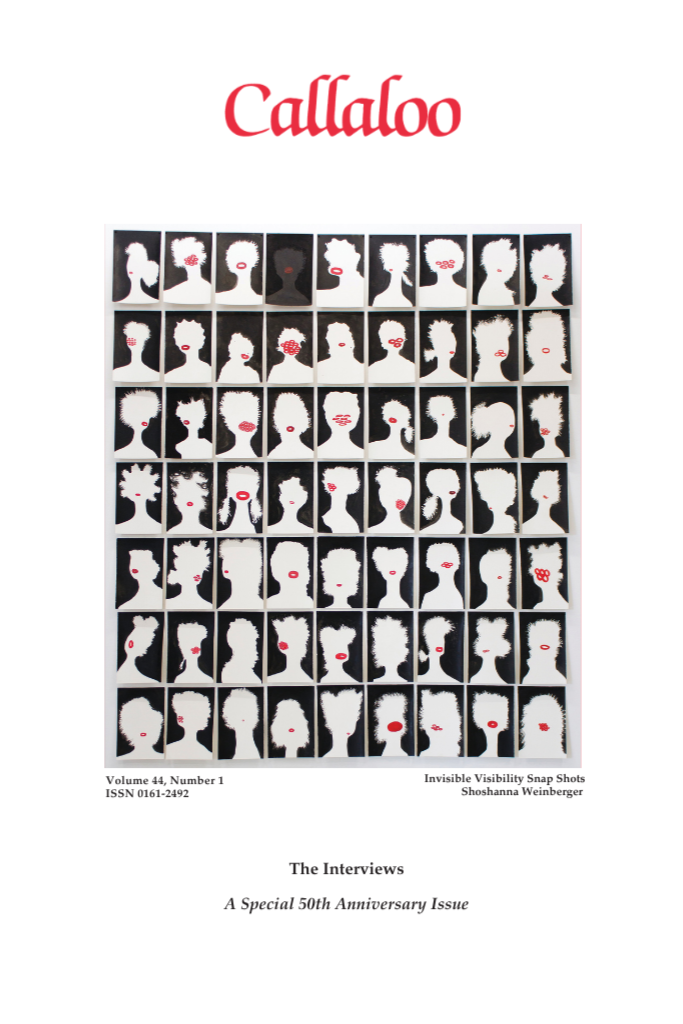
Winter 2026 - 44.1
The Interviews: A Special 50th Anniversary Issue
As we began contemplating our 50th anniversary, the treasure trove of interviews published in the journal were my very first thought. Starting with the first issues, Callaloo published the reflections of some of the most important writers, artists, scholars, and musicians from across the African diaspora. Each of these conversations is a time capsule. We get a glimpse of what these writers were thinking and feeling about their early work, or how they looked back on their careers. It’s a real treat, for instance, to read an issue like Volume 19.2, which was published in 1996. From that one issue alone, we’ve included three separate interviews with Edwidge Danticat, Elizabeth Alexander, and Sharan Strange.
This issue also serves as a memorial to some of the late giants of Black literature. We pay homage to Chinua Achebe, Octavia Butler, Aimé Césaire, Lucille Clifton, Maryse Condé, Keorapetse Kgositsile, Greg Tate, Derek Walcott, and Margaret Walker by revisiting their interviews. We’re excited that this issue will offer some of our new, younger readers a chance to discover these important Black writers, and that those who have been with us will have a chance to revisit interviews with their favorites.
–Kyla Kupferstein Torres