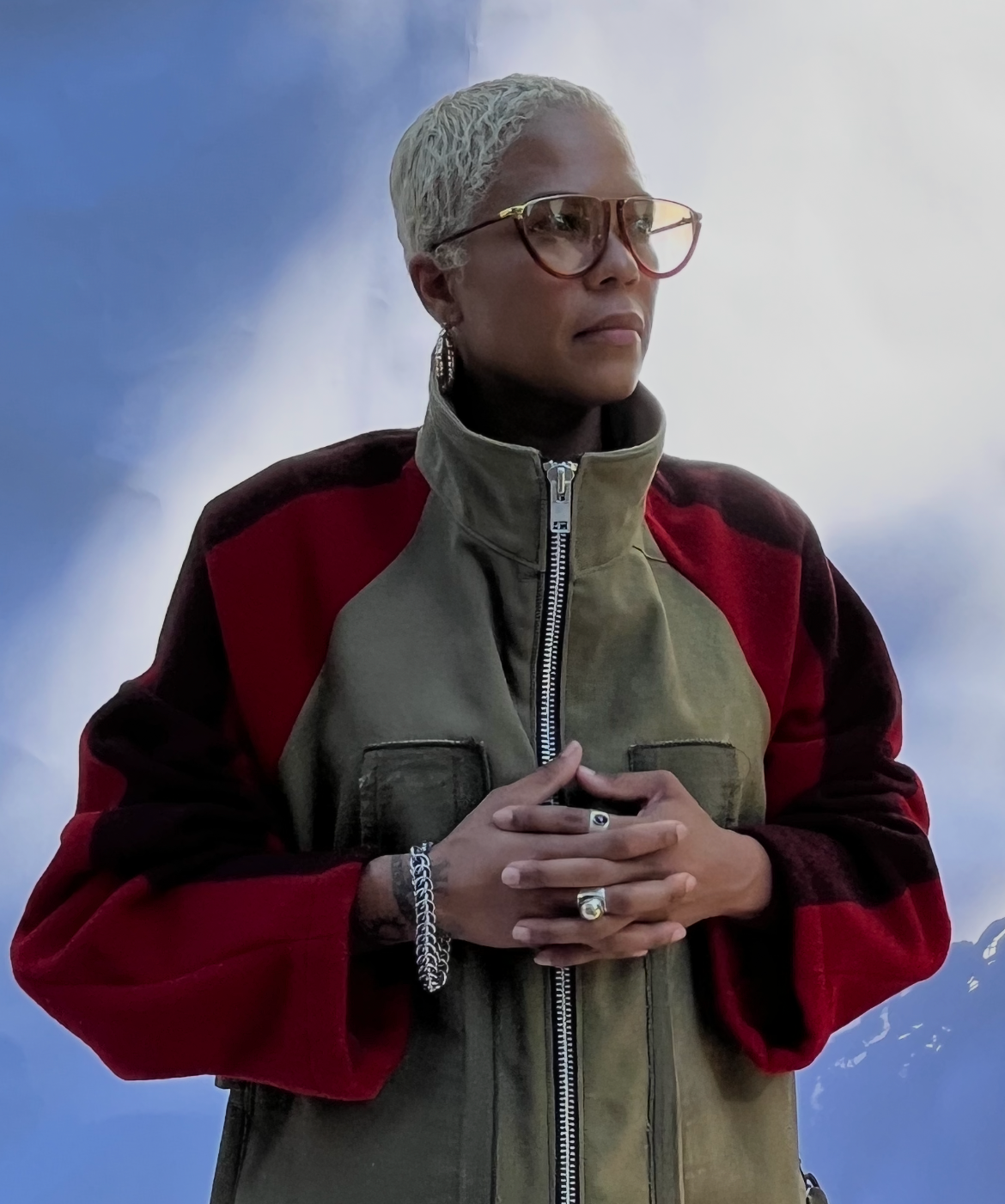
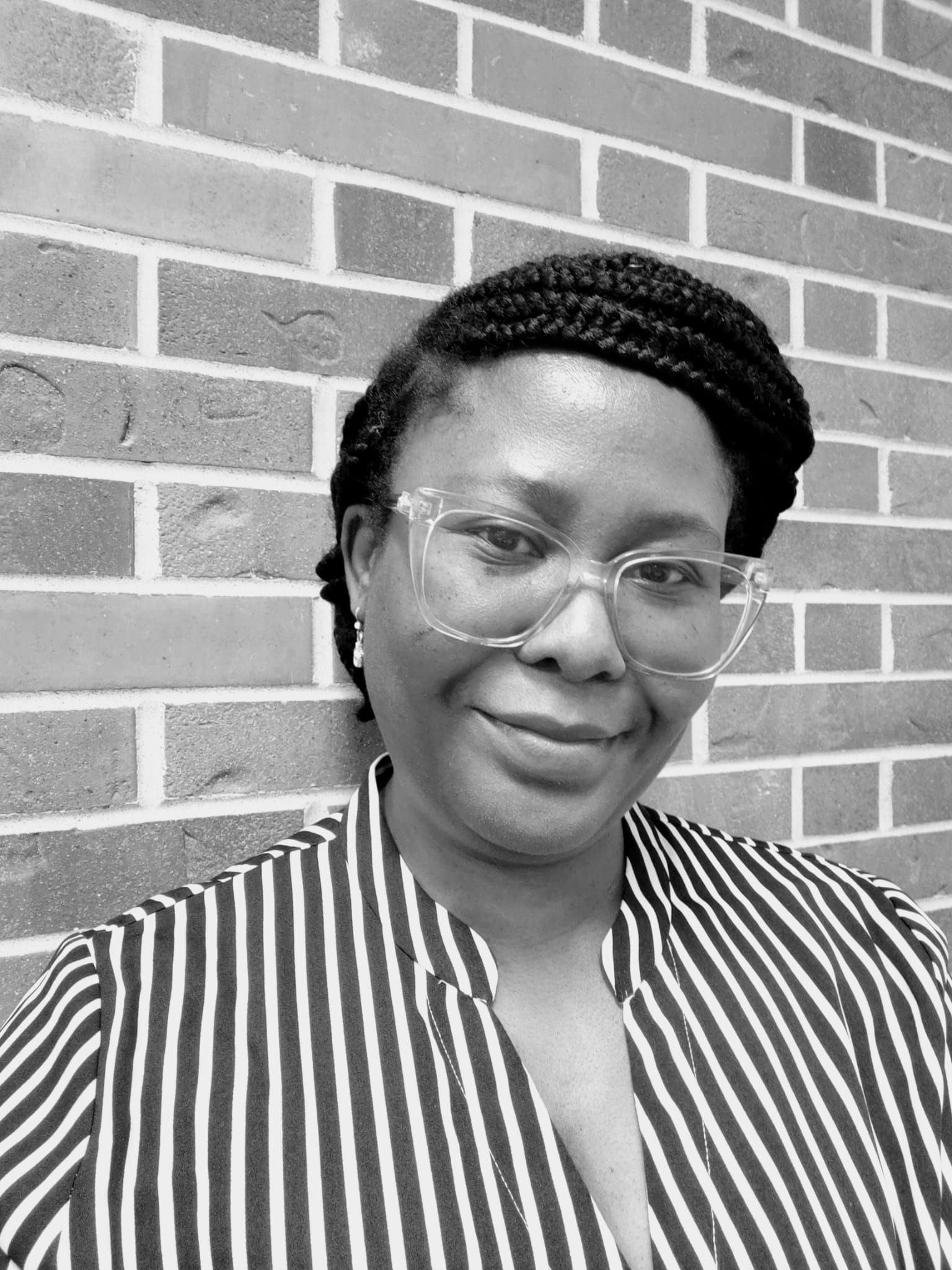
Contributor Spotlight: Adams Adeosun
"I want the setting to announce itself, even when I’ve declined to put a name on it."
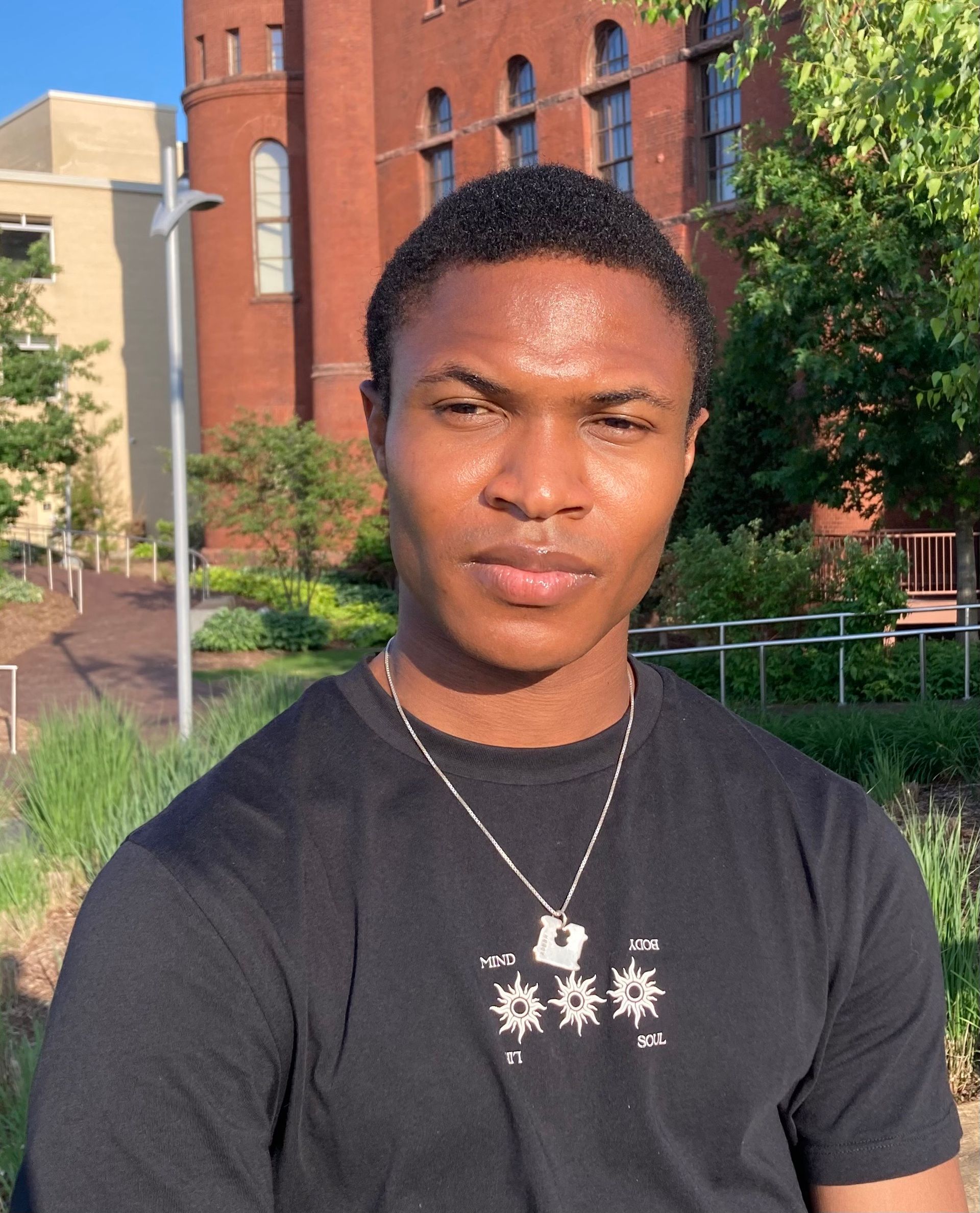
Adeosun's story, "Swimming Lesson," appears in Issue 44.2.
What conversations, questions, or experiences were you carrying while writing this
piece?
I wrote “Swimming Lesson” in 2023, which was a time of great instability in the world, not that there was much stability before or since then, I mean, that line from Zora Neale Hurston’s Their Eyes Were Watching God, “There are years that ask questions and years that answer,” became more apt and ubiquitous with each passing year, so much so that it seemed to me, in 2023, that everyone I knew could recite it crisply, and in the middle of all that I was no longer sure what it meant to be a person in the contemporary world, in the political sense, yes, but also in the personal, since there was much uncertainty in my life too, I had just completed my graduate degree and it wasn’t clear to me what my long-term prospects were, and then I was losing friends, most of them were simply moving on to other things but, with some others, we had brushed up against the limits of our friendship, and all this reminded me of the Porcupine or the Hedgehog or the Schopenhauerian Dilemma, which is an analogy that, in the deceptive way of analogies, put some clarifying distance between me and the subjects of community and intimacy, and which I had read and had been reading about for some five or six years, although it was only then, in 2023, that I began to understand it in a manner that felt consequential, some sort of watershed in how I viewed the world.
Did this piece begin with form, language, character, research, or something else entirely?
This is one of those stories, rare for me, in which such fictional elements as form and language and character and research—if you can refer to the years of percolating knowledge I tried to describe earlier as that—seemed to come together at the same moment. At once, I could hear the story’s choppy voice, I could see the characters in scene, if only in silhouette, the pace of revelation was obvious to me, I even knew how many sections and how long each section was going to be, all this in spite of myself, since, as a matter of principle or naivety, who is to say, I refuse to plot or take notes, I prefer to retain only what is memorable. It was as though I had been planning the story for a long time without being aware of it. I remember that I wrote linearly, from the title to the last line, which is not to say quickly, and what significant changes were made in the end were at the suggestion of Kyla Kupferstein Torres, who I found to be a wonderfully rigorous editor.
Tell us about a book or writer that influenced your work in this issue.
I suppose I can safely put this one on Namwali Serpell whose “Muzungu,”—and this might have been her first published story—appeared in
Callaloo back in 2007, was reprinted in
The Best American Short Stories 2009, and shortlisted for the Caine Prize for African Writing in 2010. Serpell is one of those writers whose work, whatever the genre, although her methods are diverse and often unconventional, always has the feeling of inevitability, as though it couldn’t have been any other way at all. What Toni Morrison says of William Faulkner and Serpell says of Morrison can be said of Serpell too: “The structure is the argument.” You can see it in her novels, her essays, her short stories. I especially like “The Sack,” which was published in
Africa39, and won that Caine Prize in 2015. Now that I think about it, “Swimming Lesson” shares that story’s disorienting structure and atmosphere in which, as they say, nothing is as it seems.
How do place and geography shape your writing?
I'm interested, these days, in looking rigorously at the hyper-specific experiences of provincial characters through a subtextual lens and in elegant prose. Where previously I had treated geography as an accident of fate or as grounds for absurdism in the tradition of the perambulatory novels of Amos Tutuola, I’m invested now in immersing it, as praxis, in narrators and characters and their points of view. Even in my engagement with universal concepts and experiences, volatile political institutions for instance, the complexities and complications of gender and sexuality for instance, I want to run them through cultural philosophies and attitudes, I want the setting to announce itself, even when I’ve declined to put a name on it. In the case of Fola in “Swimming Lesson,” this accounts, in part, for his swift disintegration once he finds himself idle in a city, Lagos that is, which takes great pride in entropy.
What are you reading right now?
My reading habits are quite erratic. I just finished Pedro Lemebel’s
My Tender Matador, which a lovely friend gifted me a couple years ago. It’s about a middle-aged drag queen who falls in love with a young revolutionary in Augusto Pinochet’s Chile and who, through this desire, becomes involved in the assassination attempt on that dictator in 1986. I’m currently in the middle of J.M. Coetzee’s
Waiting for the Barbarians, Faulkner’s
The Sound and the Fury, and Ernest Hemingway’s
The Sun Also Rises, which was given to me by a mentor who thinks it might be instructional for my work-in-progress. The other day I went to the library and checked out Marie NDiaye’s
All My Friends, Mariette Navarro’s
Ultramarine, Dambudzo Marechera’s
The House of Hunger, Sheila Heti’s
How Should a Person Be? and
Pure Colour, Lola Shoneyin’s
The Secret Lives of Baba Segi’s Wives, including the stage adaptation by Rotimi Babatunde, and Ola Rotimi’s
The Gods Are Not to Blame, which is basically Sophocles’ Oedipus Rex transmuted to the context of a city in southwestern Nigeria. I’ve been slowly making my way through them.
ADAMS ADEOSUN is a writer from Nigeria. They are a graduate of the University of Iowa Writers' Workshop and a Wallace Stegner Fellow at Stanford University. Adeosun's work has appeared in publications, including
American Poets,
Isele,
The Offing,
Transition, and has been supported by fellowships from MacDowell and the Wisconsin Institute for Creative Writing. Their poetry chapbook,
If the Golden Hour Won't Come for Us, is included in the box set, Kumi: New-Generation African Poets.