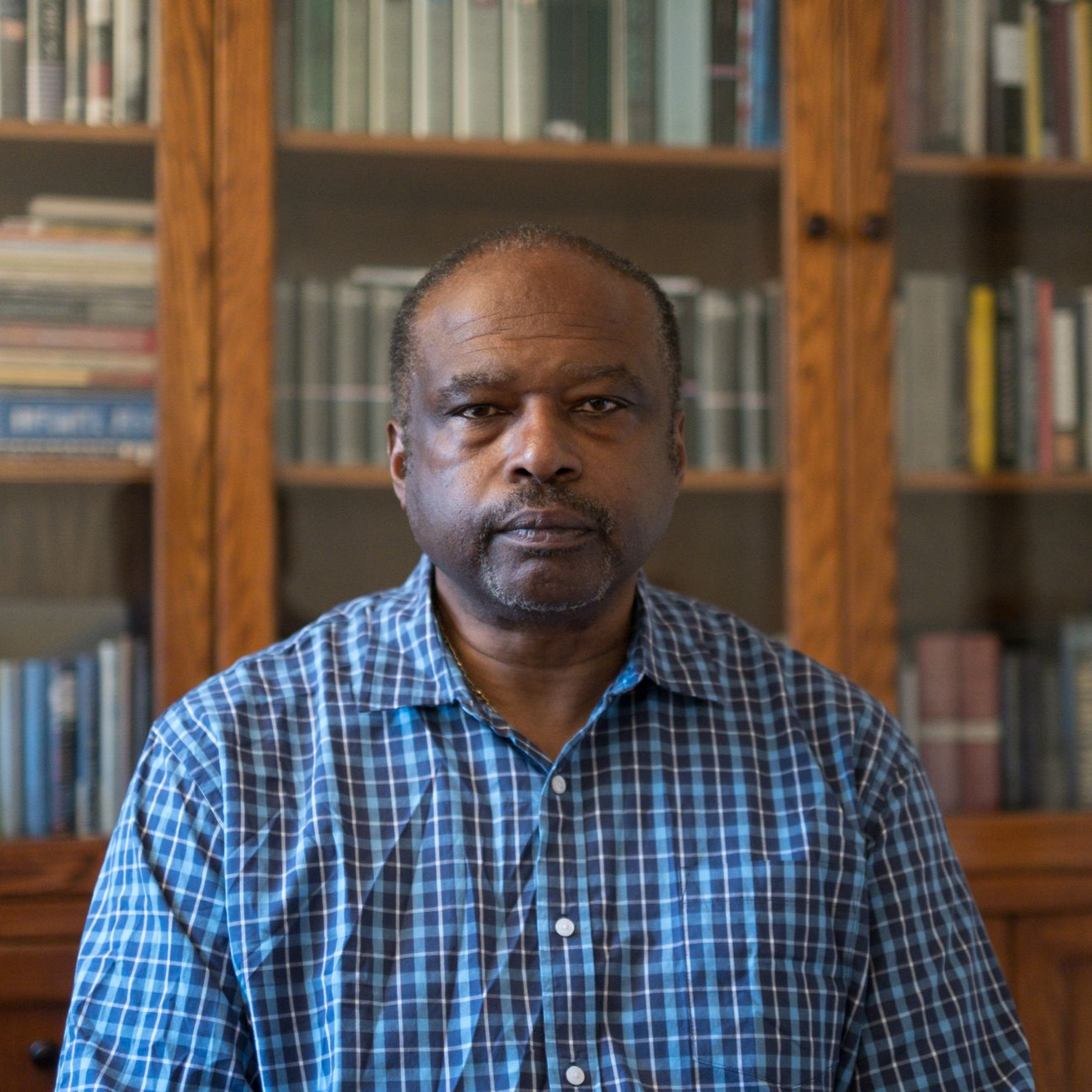
Contributor Spotlight: Brother Yao (Hoke Smith Glover III)
"My practice is like that of a jazz musician. Consistent practice that gives rise to transcendental performance."
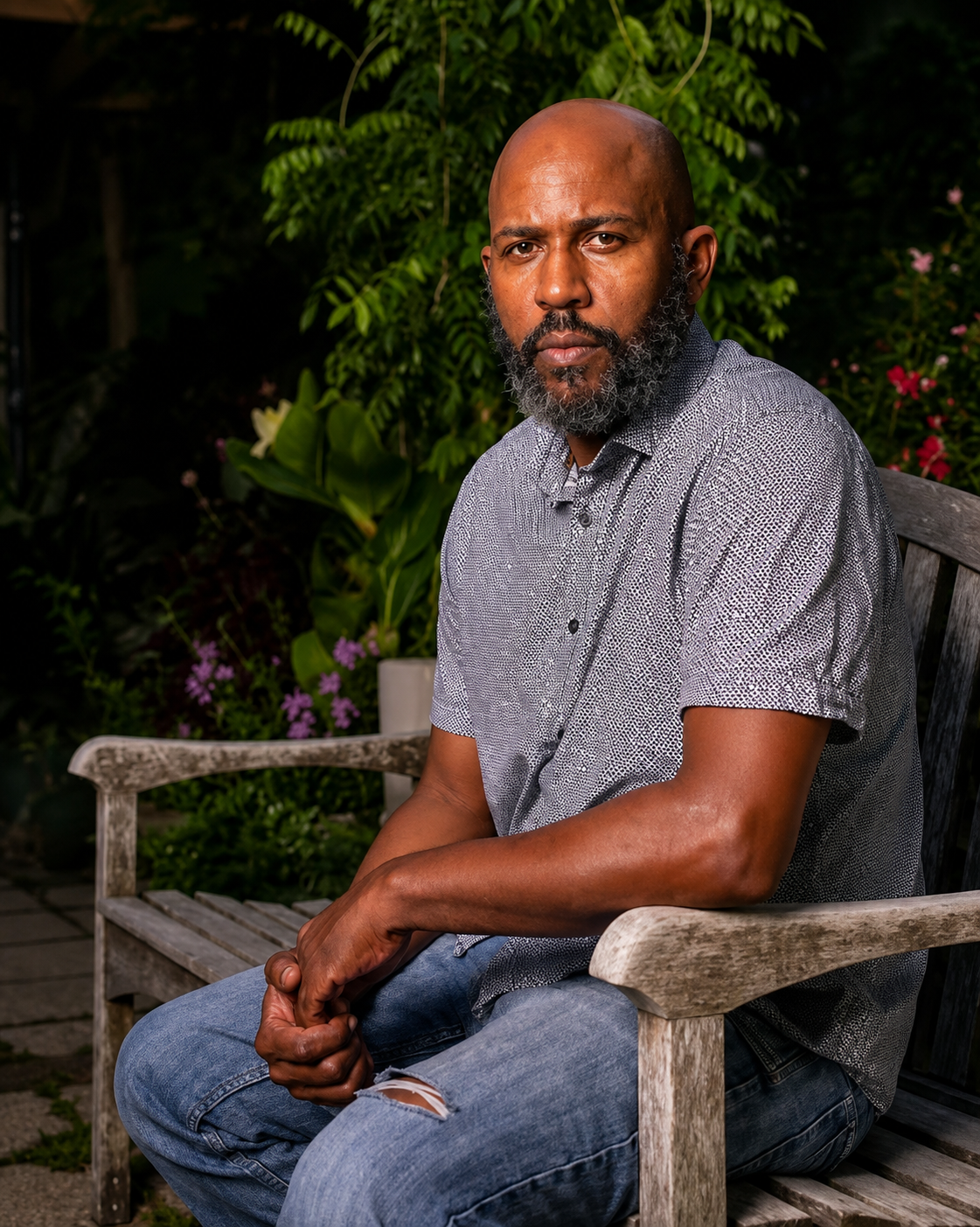
Glover's poem, "I speak for me, the tiny me, torn up," appears in Issue 44.2.
What role does history or memory play in your creative practice?
I am fascinated and constantly return to my parents as archetypes of consciousness moving through generations. My memories of them seem to haunt my writing process. My fascination with Black History comes out of an attempt to understand them. In my adolescent years it was their books on Black History—titles that weren’t taught in the private schools I attended—that began my journey as a writer. My journey as a writer is inseparable from my journey to understand my family, reconcile my memory of them, and plot them on the map of Black History.
How does this piece speak to or depart from your previous work?
“I Speak ….” is different from anything I’ve published before. In my collections there are only a few poems that actually present themselves as prose poems. I am drawn usually to a lyrical stanza, and language that almost appears mundane. I love enjambment and rhythm. I also love to employ homonyms and homographs. In my failed attempts to learn Mandarin, I was struck by how things that sound the same can be spoken with different tones mean different things. So I do quite a bit of repetition in tight spaces of the same sounds attempting to shift the tone and meaning, and though it is art, it is not artifice. Cursing is one of the best examples. If you imagine how to curse right, the intonation can change the meaning.
The same principle applies to [my book]
Crazy as Hell: The Best Little Book in Black History;
though it is not a book of poetry, the center of the book is a poet’s idea about rhythm, intonation, and meaning captured in one word, one phrase. One of the subtexts of the book, a poet’s signature, is the different types of crazy we present in the book. What makes it beautiful and poetic is that the different types of crazy have verbal presentations that exist in the everyday. The word’s meaning has a range that depends on how it is intonated. In “I Speak….” this happens a few times. A reference point of this type of work is when I state "...my walk, my walking, how far I have walked, the drum of my step.” Another instance is when I state, “My lot, a lot...” Part of what I like to get at are those quick pivots on homonyms. Those are forms of rhythm signature, but here what makes the work different is the prose format combined with surrealist juxtapositions. It is different. I am thankful.
How has your writing practice changed over time?
I am much more confident as a writer at this stage. I am also reluctant to submit. This is an important publication for me. My first in
Callaloo after 35 years or so of submitting. For at least two decades I practiced reading and writing everyday. I also engage taiji as a practice most days. In my mind they are similar practices. In fact, practicing writing for years is the foundation of my taiji practice. In taiji, the state of attentiveness, a balance between openness, receptivity, attention, and then an action that finds union with the thread of energy—the connection with chi in the body seems very similar to the art of writing poetry. At the least it is doing/non doing. So often now my "practice poetry time" comes through the form of taiji. Following the thin line of consciousness that the poems serve is a lot like holding the concept of a unified energy in the body.
What are you reading right now?
I am always engaging the
I Ching and the
Tao Te Ching.
My current work is on binary codes, the
I Ching, and AI. There are similarities between those works and poetry, but that’s an essay–ha ha.
What conversations, questions, or experiences were you carrying while writing this piece?
It is funny, I have hundreds of unsubmitted poems. Many date back decades. I found a set of old prose poems that I worked on probably in 2015. I could go back and try to remember what I was doing then, but the intimate space surrounding the composition of my work usually escapes me.
Like the question surrounding practice above, I do my best to practice consistently, and then when I engage writing bring all my attention to the moment. My practice is like that of a jazz musician. Consistent practice that gives rise to transcendental performance. Or sometimes the practice becomes transcendental.
How do you know when a piece is finished?
For me, it seems they never are done. Art defies the ego. Part of my art is trying to see myself. We are dynamic, so that view of ourselves changes. Poems are always subject to being revised or even disowned, ha ha. I usually disconnect after a series of tinkers and readings out loud. I can usually let go when I sense some rhythm structure that seems highly refined or perfect.
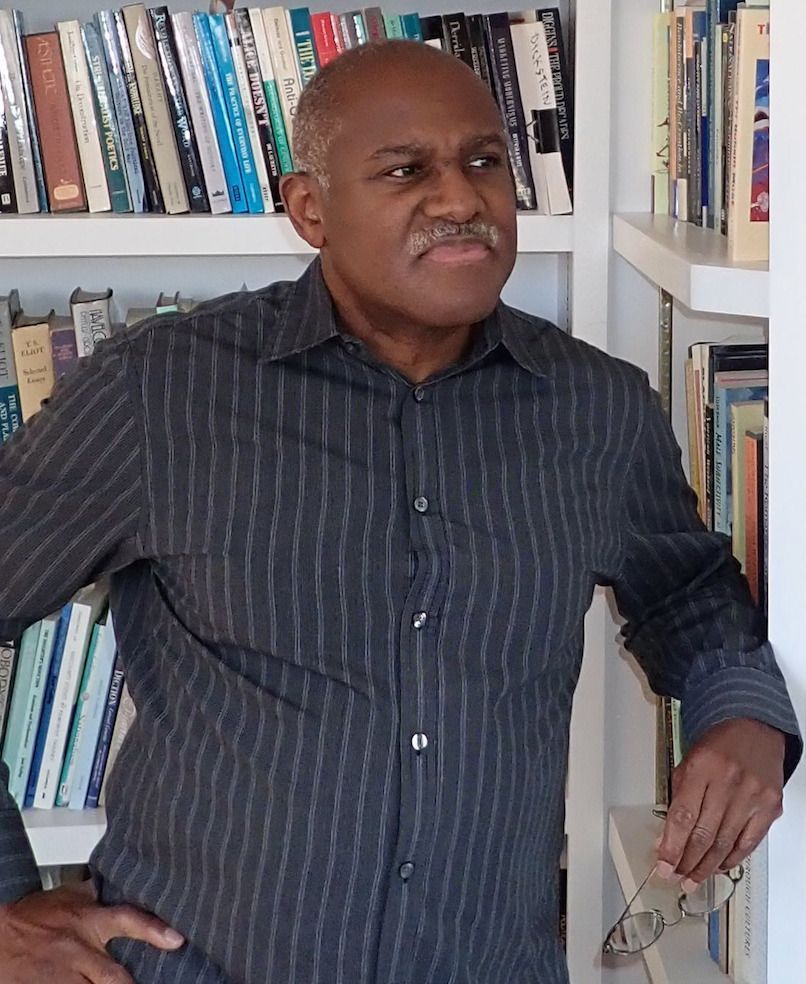
HOKE S. GLOVER III (BRO. YAO) is the author of
Crazy as Hell: the Best Little Guide to Black History (W. W. Norton, 2024), co-authored with V. Efua Prince;
One Shoe Marching Towards Heaven (Africa World Press, 2020); and
Inheritance (Willow Books, 2016). The core of his work is the wider arc of the documented record of African-American consciousness via the text and the contradictions that arise from the lack of African-American publishing infrastructure. Glover graduated from the Bowie State University English Department in 1994. While at Bowie he began selling books in the student center. This small vending operation grew to become Karibu Books, one of the Nation’s largest Black bookstores from 1993-2008. In 2005, he returned to Bowie State University as a professor and is now the chair of the Department of Language, Literature & Cultural Studies. He has published work in
Rattle,
African-American Review,
Obsidian, and other journals.